- Janggohang Silchi Festival, a Seafood Trip That Felt More Local Than Touristy
- First Impressions of Janggohang Port and the Fish Center
- A Local Festival Stage Beside the Sea
- Inside the Fish Market: Buying Seafood at Sumine Susan
- Fresh Silchi Sashimi, the Main Reason to Visit
- Kkolddugi and Side Dishes That Made the Table Feel Fuller
- Soy-Marinated Crab, Korean Pancake, and a Warm Bowl of Silchi Soup
- Practical Tips Before Visiting Janggohang Silchi Festival
- Who Would Enjoy This Festival?
- Final Thoughts on Janggohang Silchi Festival
Janggohang Silchi Festival, a Seafood Trip That Felt More Local Than Touristy
The Janggohang Silchi Festival is one of those local Korean festivals that sounds simple at first. You go to a port, eat silchi, look around for a while, and come back. But once I actually arrived at Janggohang Port in Dangjin, the day felt less like a quick food stop and more like a slow west coast harbor trip.
Janggohang is not a flashy seaside destination. It has the kind of atmosphere you expect from a working Korean fishing port: small boats tied along the harbor, fish market stalls, wet floors inside the market, festival tents near the waterfront, and people moving between the stage area and seafood restaurants. That realistic, slightly busy, very local mood is what made the visit memorable.
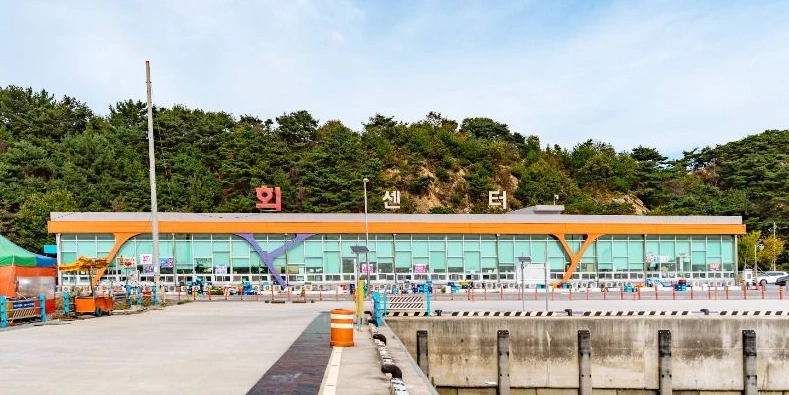
The first thing that stood out was the Janggohang Fish Center building. It sits right near the harbor, with a wide front area and low green hills behind it. From there, it was easy to walk toward the water and see fishing boats resting in the calm harbor. The weather was a little overcast when I visited, but that actually suited the mood of the place. The sea looked quiet, the sky was soft, and the whole port had a calm spring atmosphere.
The Janggohang Silchi Festival is not the kind of festival where you simply watch one big performance and leave. It feels better when you take your time. Walk around the harbor, look inside the fish market, watch the local stage for a while, and then sit down for a seafood meal. That flow made the visit feel natural.
First Impressions of Janggohang Port and the Fish Center
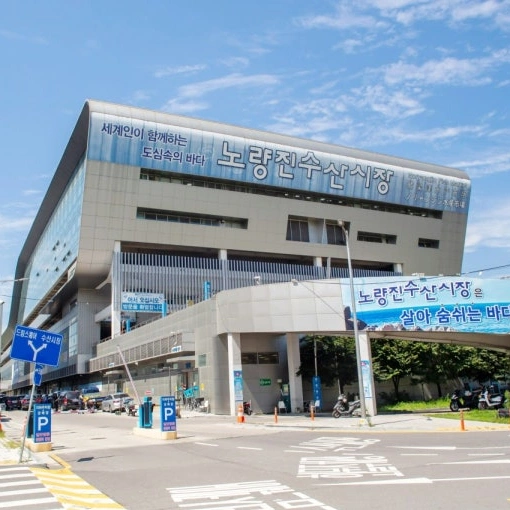
When you arrive at Janggohang Port, the fish center is one of the easiest landmarks to recognize. The building has large glass windows and a bright orange line across the front, so it immediately feels like the central point of the area. Around the building, people were walking in and out, cars were parked nearby, and the festival atmosphere was already visible.
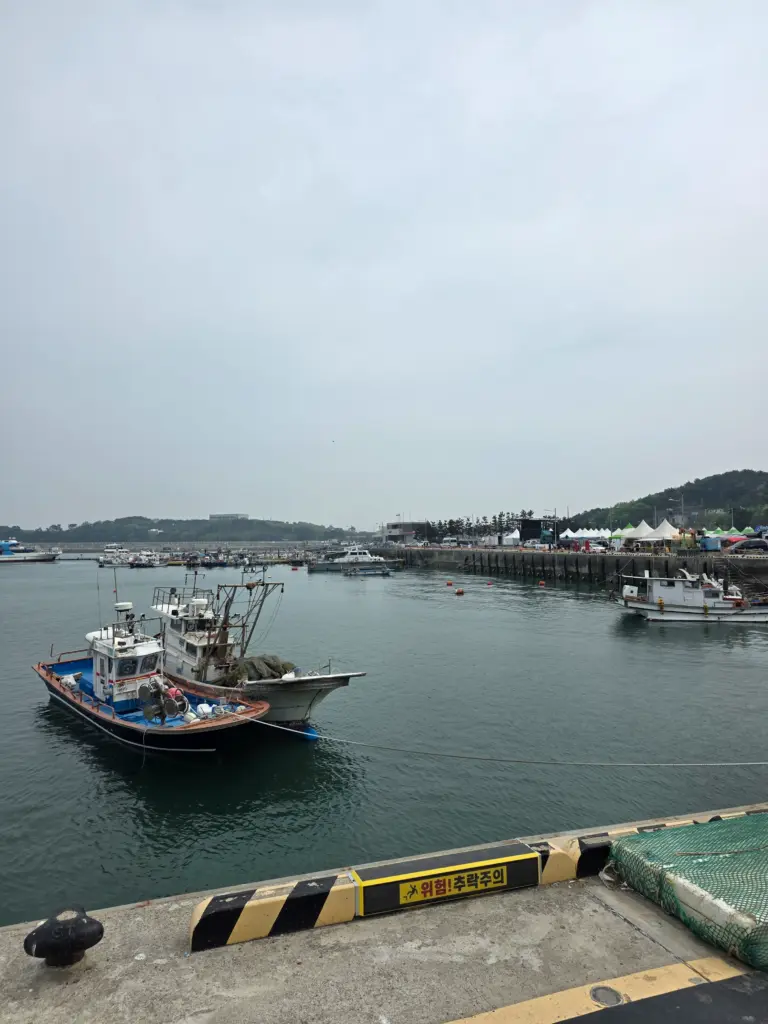
A short walk from the fish center leads to the harbor view. In the photo, you can see several small fishing boats floating quietly in the water. Some boats had fishing gear and nets on board, which gave the scene a very real port atmosphere. This was not a polished resort-style waterfront. It felt like a place where people actually work, fish, sell seafood, and gather for a local event.
Personally, I liked that part. Janggohang Port does not try too hard to look pretty for tourists. The charm comes from the ordinary details: mooring ropes, floating buoys, safety signs along the edge of the pier, festival tents in the distance, and the quiet movement of boats in the water.
If you visit during the festival, I recommend spending a little time around the harbor before eating. The view of the boats, the water, and the festival tents together gives you a better sense of what the Janggohang Silchi Festival is about. It is not only about food. It is also about being in a Korean west coast fishing town during a seasonal seafood event.
A Local Festival Stage Beside the Sea
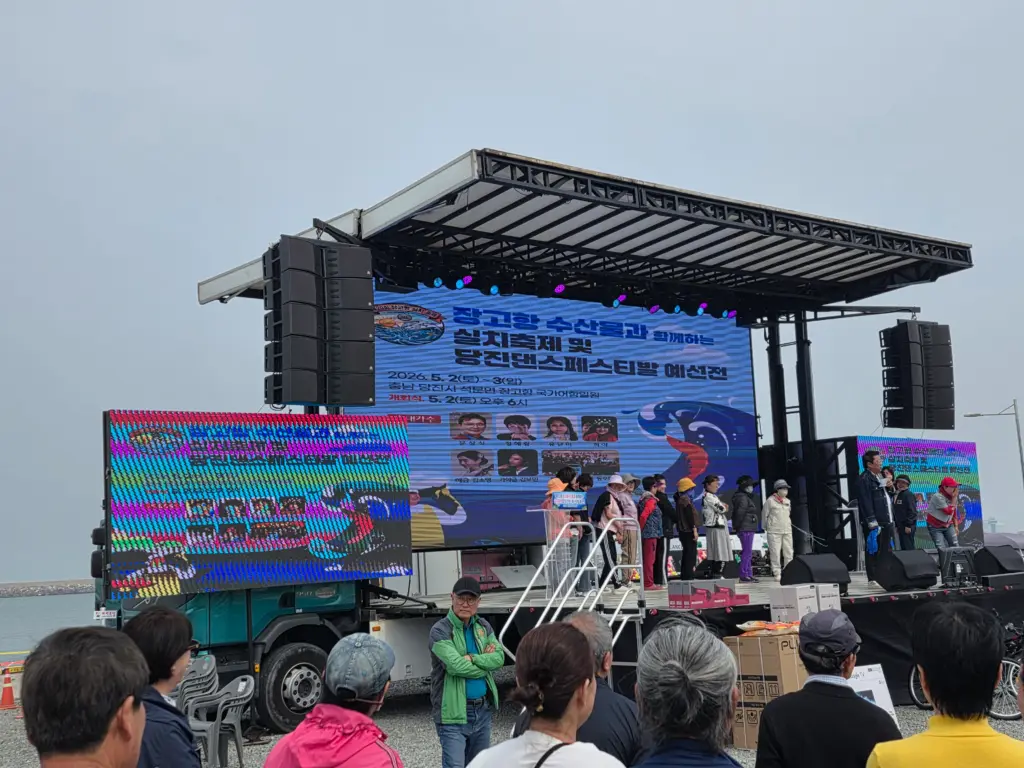
The festival stage was set up near the waterfront, with large LED screens and speakers on both sides. The main screen showed information about the Janggohang seafood event and dance festival. There were performers and local participants on stage, while visitors watched from the open area in front.
The mood was very much like a regional Korean festival. It was not overly polished or commercial. There were older visitors, families, local residents, and people who seemed to have come mainly for the seafood. Some watched the stage for a while, while others moved between the event area, market stalls, and seafood restaurants.
That casual flow is part of the charm. You do not need to follow every program or performance to enjoy the festival. Just being there, near the harbor, with music coming from the stage and seafood stalls nearby, already gives you the feeling of a local spring festival.
Since festival programs, schedules, and performances can change each year, it is better to check the latest official information before visiting. But even without planning around a specific performance, the stage area adds energy to the harbor and makes the whole place feel more festive.
Inside the Fish Market: Buying Seafood at Sumine Susan
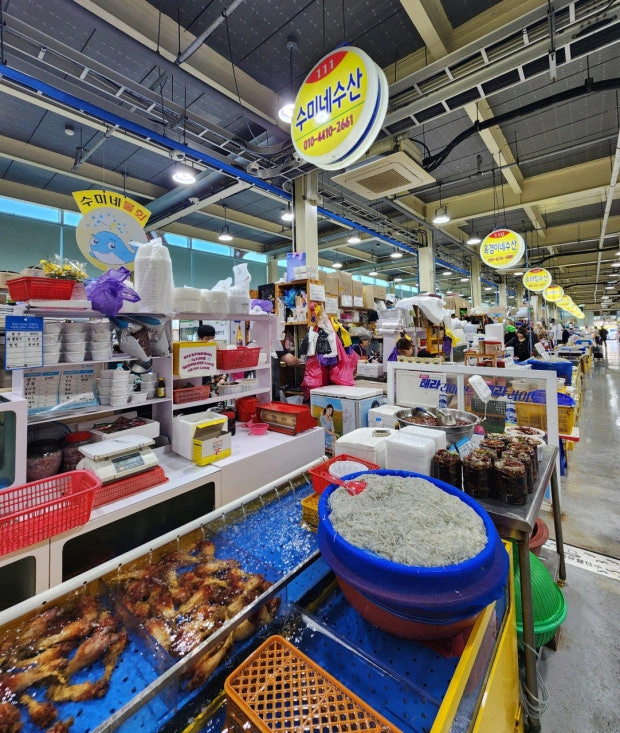
One of the most interesting parts of the visit was looking inside the fish market. The photo from the market shows several seafood stalls lined up under the ceiling, with signs, tanks, baskets, and containers arranged closely together. One of the stalls visible in the photo is Sumine Susan, and this is where the seafood we ate that day was purchased.
This made the meal feel more connected to the place. Instead of simply sitting down at a restaurant and ordering from a menu, there was a sense of seeing the seafood in the market first and then having it appear on the table afterward. A large blue basin filled with silchi was especially noticeable. Around it were other seafood items, sauces, side dishes, and packing materials, all creating that lively Korean fish market atmosphere.
The market was not fancy, but it felt honest. The floor was wet in places, the stalls were busy, and the seafood was displayed in a practical, everyday way. For travelers who want to see a more local side of Korea, this kind of fish market is often more memorable than a perfectly designed tourist spot.
The silchi, kkolddugi, and side dishes we later ate at the table came from Sumine Susan. That connection between the market photo and the meal made the experience feel more complete. You could see where the seafood came from, then sit down and eat it right there near the harbor.
Fresh Silchi Sashimi, the Main Reason to Visit
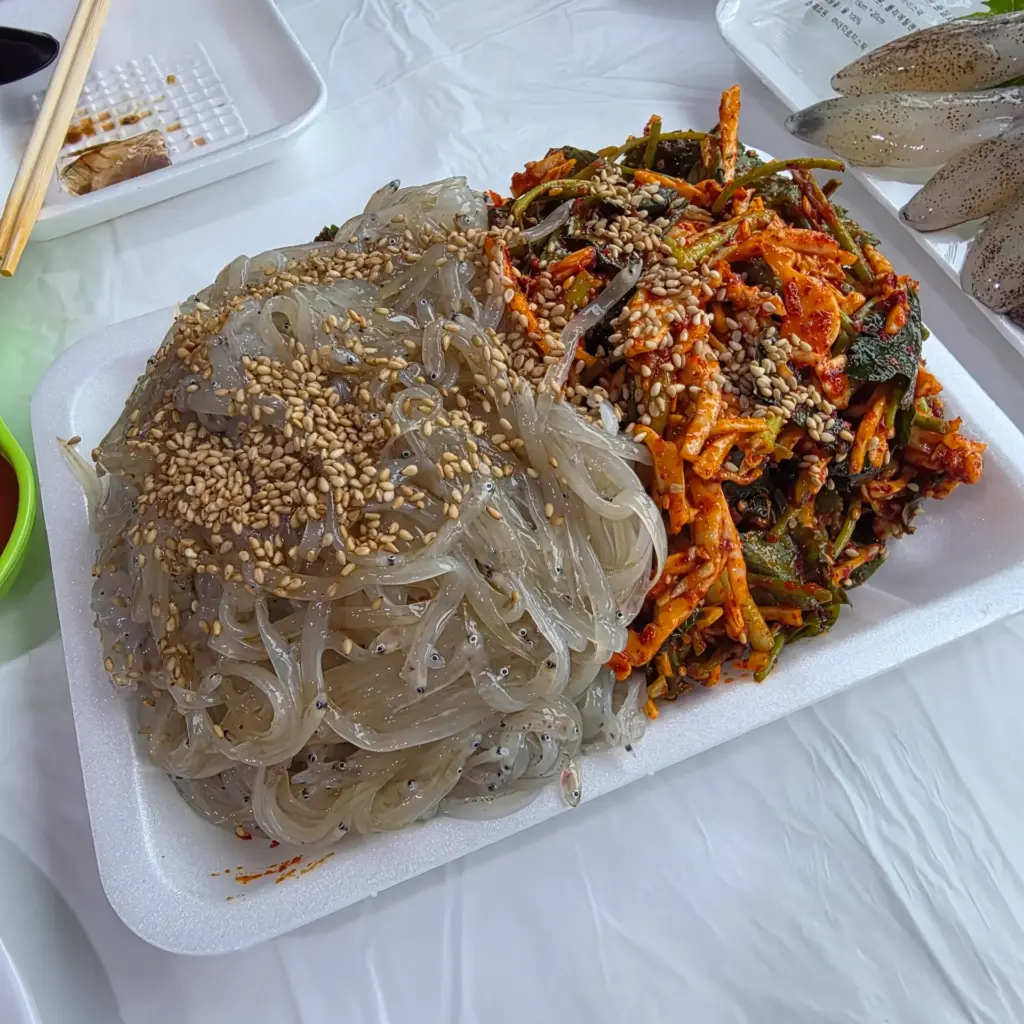
The main dish of the day was silchi sashimi. Silchi is a tiny, delicate fish that is especially associated with seasonal seafood on Korea’s west coast. On the plate, it looked almost transparent, with sesame seeds sprinkled generously on top. Next to it was a spicy seasoned vegetable mix, which added color and flavor to the dish.
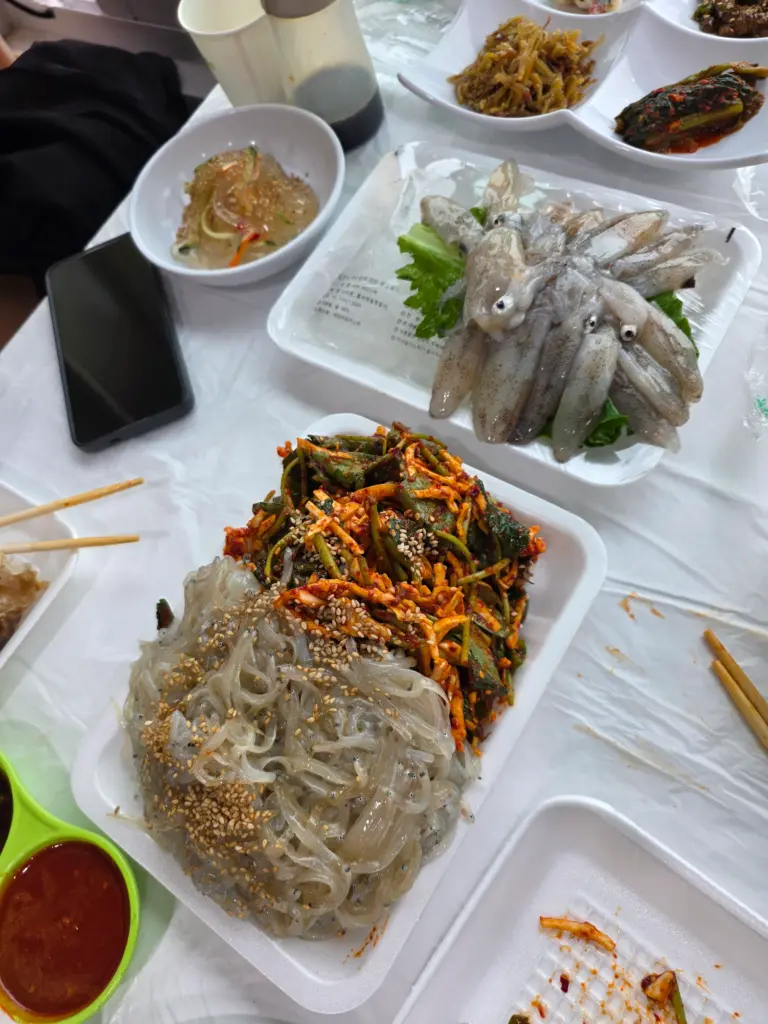
Silchi has a very different texture from regular sliced sashimi. It is soft, slippery, and delicate rather than chewy. The taste is mild, with a light ocean flavor. When eaten on its own, it feels clean and gentle. When eaten together with the spicy vegetable seasoning, the flavor becomes much brighter and more satisfying.
The presentation was not fancy, and that actually suited the festival atmosphere. The silchi was served on a simple foam tray, with a generous portion piled up beside the spicy seasoning. It looked exactly like the kind of food you would expect to eat at a local harbor festival: fresh, casual, direct, and very seasonal.
For someone trying silchi for the first time, the texture may feel a little unfamiliar. It is not like tuna, salmon, or flatfish sashimi. But if you are visiting Janggohang Silchi Festival, this is the dish worth trying at least once. It gives the trip a clear sense of place.
Kkolddugi and Side Dishes That Made the Table Feel Fuller
Alongside the silchi, there was also a plate of kkolddugi. At first glance, it may look like small squid, but the seafood on the table was kkolddugi. It had a glossy, semi-transparent appearance, with small speckled patterns visible on the body. Compared with silchi, kkolddugi had a firmer and more noticeable texture.
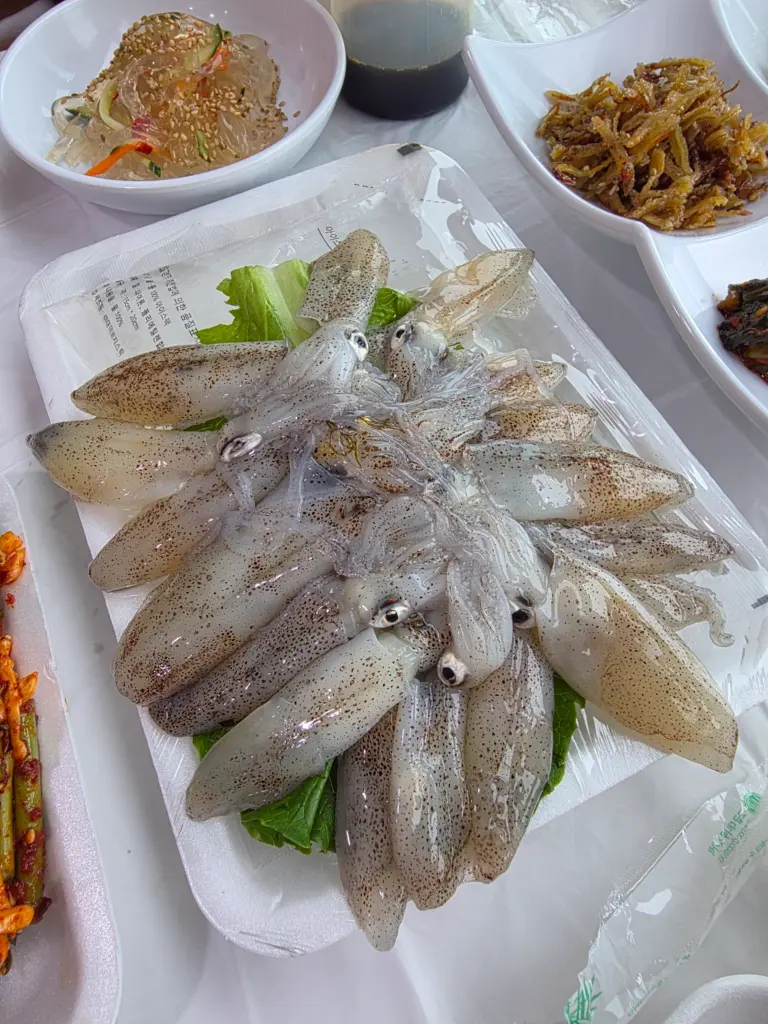
This contrast worked well. Silchi was soft and delicate, while kkolddugi had more chew. Eating them together made the table feel more balanced. The silchi went well with the spicy vegetable mix, while the kkolddugi was good with dipping sauces.
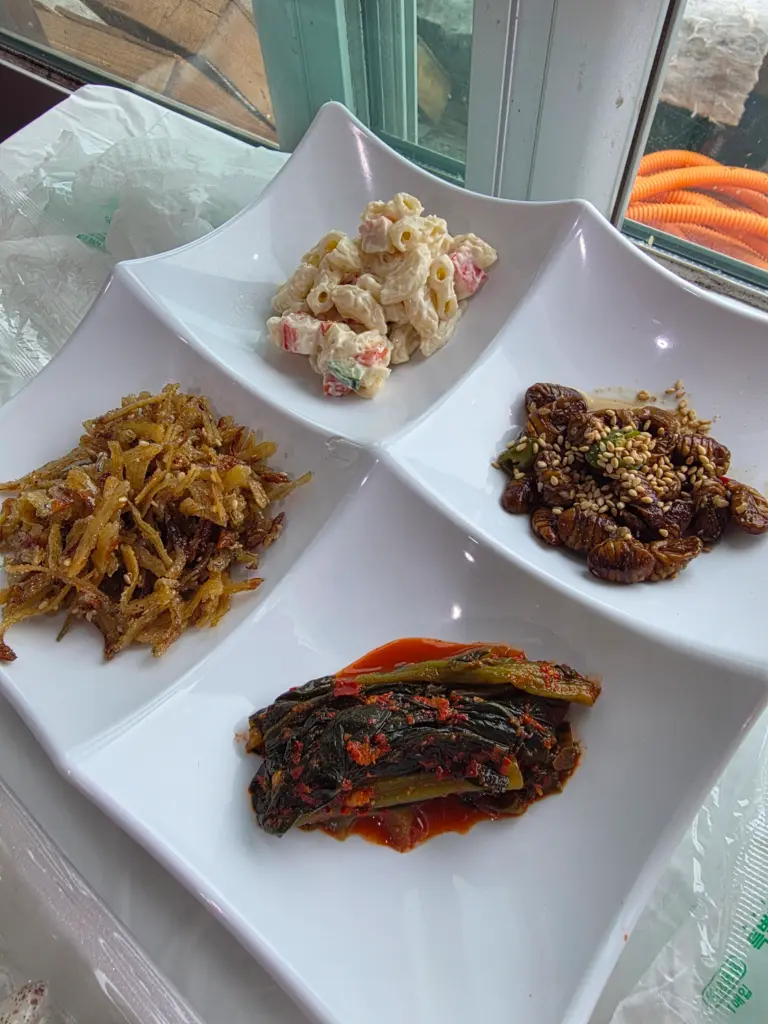
There were also several Korean side dishes on the table. One divided white plate included stir-fried small fish, macaroni salad, beondegi, and a spicy kimchi-style side dish. These were not luxurious side dishes, but they fit the mood of the place. They made the seafood meal feel more relaxed and complete.
This is one of the things I like about eating at local Korean seafood places. The main seafood is important, but the small side dishes also shape the meal. They give you something salty, spicy, sweet, or creamy between bites of fresh seafood.
Soy-Marinated Crab, Korean Pancake, and a Warm Bowl of Silchi Soup
The table also included soy-marinated crab and a Korean-style pancake. The crab was marinated with soy sauce, chili, and seasoning, and it added a deeper, saltier flavor to the meal. There was also red chili sauce on the side, along with soy-based sauce that I poured separately for dipping.
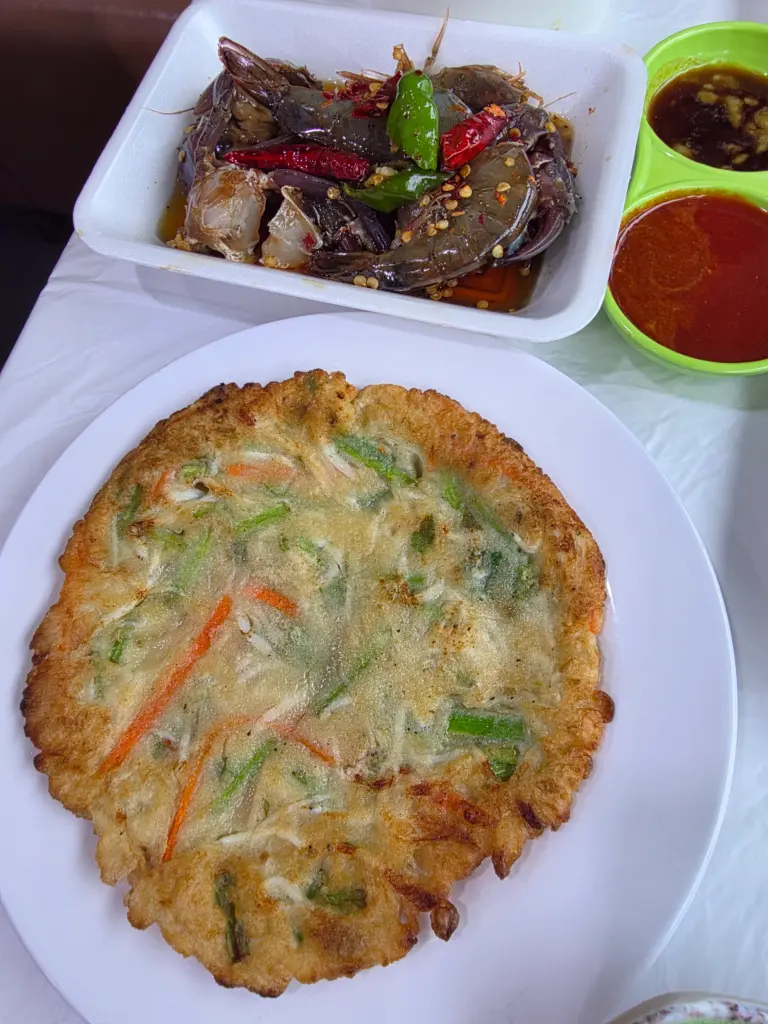
That detail matters because it was not a special sauce presented as a separate dish by itself. It was something I poured to eat with the seafood. When eating silchi, kkolddugi, and other seafood, having both chili sauce and soy-based dipping sauce made it easier to enjoy the different textures and flavors.
The pancake was also a good addition. It had a golden, slightly crisp edge and vegetables inside. After eating fresh seafood for a while, a warm and filling pancake made the meal feel more substantial. It is the kind of dish that works naturally on a seafood table, especially at a local festival.
The warm silchi soup was another memorable part of the meal. In the photo, the soup is served in a large bowl with green leafy vegetables and silchi in a brownish broth. When I tasted it, it reminded me a little of Korean aukguk, a mild soup often made with leafy greens. The silchi added a subtle ocean flavor, but the soup itself was not strong or overwhelming.
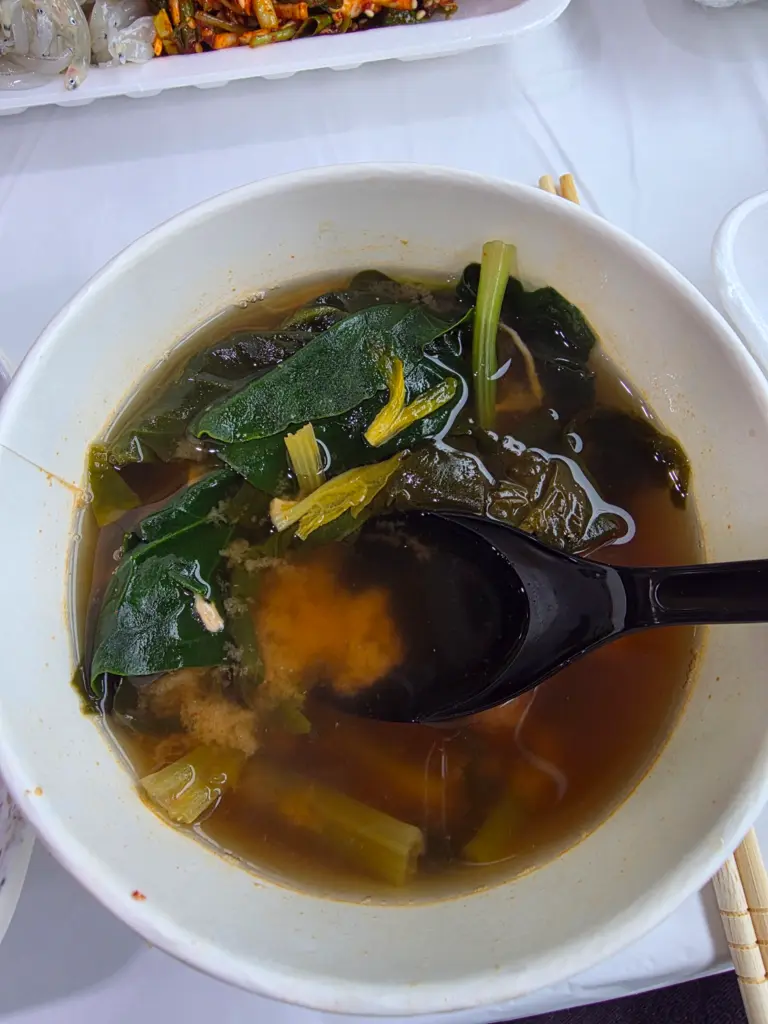
After eating cold seafood like silchi sashimi and kkolddugi, the silchi soup felt comforting. It helped balance the meal and made everything feel more like a proper lunch rather than just a seafood tasting. The broth was warm, mild, and easy to eat, with a homely feeling that matched the local festival atmosphere.
Practical Tips Before Visiting Janggohang Silchi Festival
Janggohang Silchi Festival is best enjoyed with the right expectations. This is not a polished, urban-style festival. It is a local seafood festival at a working harbor, so the charm comes from the market, the boats, the seafood, and the casual atmosphere.
Wear comfortable shoes. Around the harbor and inside the fish market, some areas may be wet or uneven. Since it is by the sea, the wind can also feel stronger than expected, especially on cloudy days. A light jacket can be useful depending on the weather.
Food options, prices, and serving styles may vary depending on the stall, restaurant, and festival season. The seafood shown here was purchased from Sumine Susan, but details can change, so it is always best to check the current situation when you arrive.
The festival is suitable for people who enjoy local food, fish markets, seafood, and slower regional travel. If you are looking for a stylish café street or a highly curated tourist attraction, Janggohang may feel too simple. But if you enjoy real Korean port towns and seasonal food experiences, it is worth considering.
Who Would Enjoy This Festival?
Janggohang Silchi Festival is a good fit for travelers who want to experience a more local side of Korea. It is especially suitable for those interested in Korean seafood, regional festivals, fish markets, and west coast harbor towns.
It can also be a nice day trip for people traveling around Dangjin, Seosan, Taean, or other parts of Chungcheongnam-do. The visit does not need to be complicated. You can walk around the harbor, watch part of the festival program, explore the fish market, and enjoy a seafood meal.
Families and older travelers may enjoy it too, especially because the festival atmosphere is relaxed and not too intense. The crowd in the photos looked like a mix of local residents, families, and visitors who came for the seafood rather than a loud party-style event.
For foreign travelers, this kind of festival can be especially interesting because it shows a side of Korea that is not always visible in Seoul or Busan. It is less polished, but more grounded.
Final Thoughts on Janggohang Silchi Festival
Janggohang Silchi Festival was not flashy, but that is exactly why it stayed in my memory. The quiet harbor, the fishing boats, the local stage, the busy market, the silchi from Sumine Susan, the kkolddugi, the pancake, the soy-marinated crab, and the warm silchi soup all came together to create a very real west coast seafood experience.
The highlight was not just one dish. It was the whole flow of the day: arriving at the fish center, walking along the harbor, watching the festival stage, seeing seafood inside the market, and then eating what had been bought there. That made the meal feel connected to the place.
If you are planning a spring trip on Korea’s west coast and want to try something more local than the usual tourist spots, Janggohang Silchi Festival is worth a visit. Just go with a relaxed schedule, check the latest festival information before you travel, and leave enough time to enjoy both the harbor and the food.
This post was automatically translated from the original English version.
This post is also available in: 한국어