- Most of the Time, Toilet Paper Can Be Flushed
- Why Some Bathrooms Still Have Trash Bins Next to the Toilet
- Paper Towels Are Different from Toilet Paper
- Public Bathrooms, Cafes, Hotels, and Subway Stations Can Feel Different
- Do Not Assume Every Bathroom Is Fully Stocked
- Look for Signs Before You Decide What to Do
- Should Tourists Carry Tissues?
- What About Cleanliness?
- Common Mistakes Tourists Make in Korean Bathrooms
- So What Should Tourists Actually Do?
- Final Thoughts
Korea Bathroom Rules for Tourists – Toilet Paper, Trash Bins & What to Know
For many first-time visitors, Korean public bathrooms are not difficult to use, but they can be surprisingly confusing at first. The biggest reason is simple: travelers expect bathrooms to work exactly the same way they do at home, and that is not always the case.
One of the most common questions is about toilet paper. Can you flush it? Should you throw it in the trash bin? Why is there a bin next to the toilet in some places but not in others? Then there are smaller things people do not think about until the moment they need them: whether there is soap, whether paper towels go in the toilet, and whether all bathrooms are stocked the same way.
The good news is that most of this is easy once you understand a few practical rules. Korea has many clean and modern restrooms, especially in newer buildings, hotels, department stores, and major stations. But travelers still run into situations where local habits, older plumbing, or different restroom setups can feel unfamiliar.
This guide explains the bathroom rules in Korea that tourists actually need to know, without exaggeration and without outdated myths.
Most of the Time, Toilet Paper Can Be Flushed
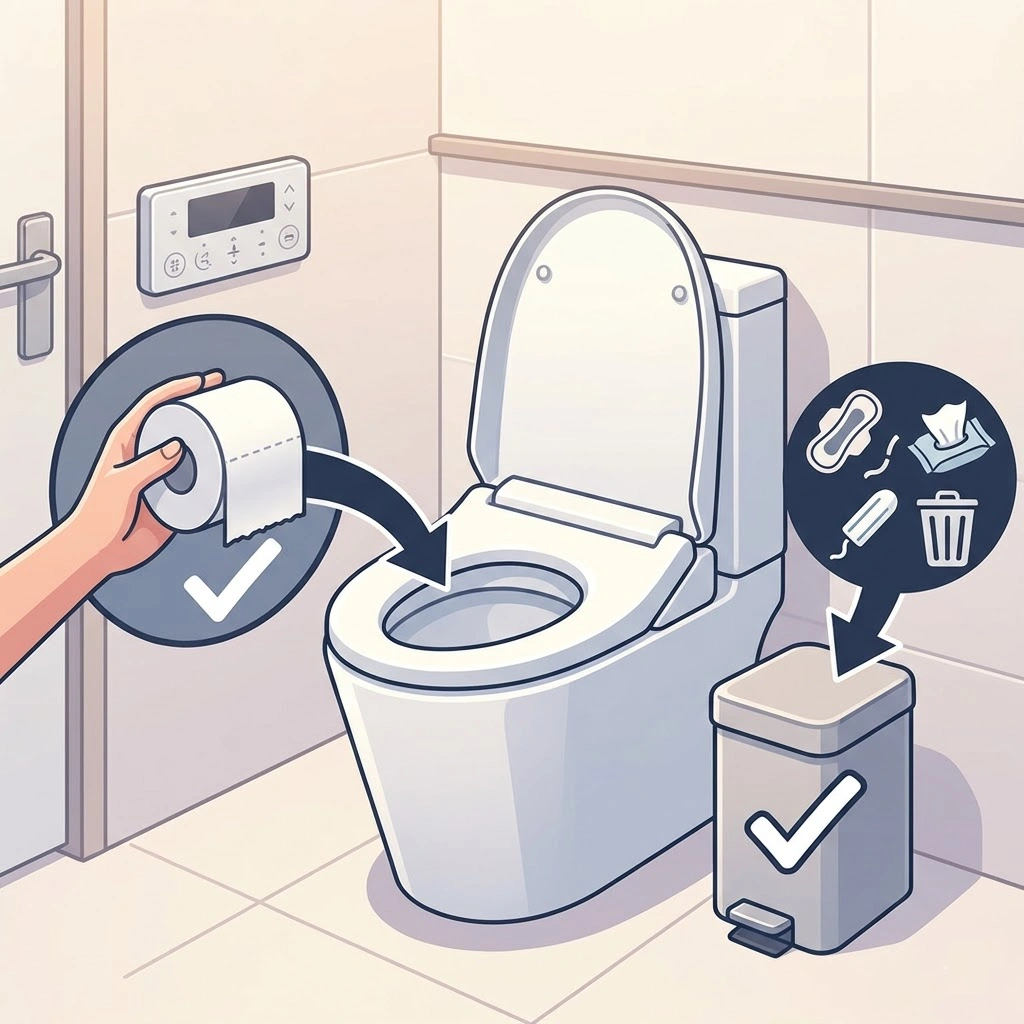
This is the first thing many travelers want to know, and the simplest answer is this: in many bathrooms in Korea, you can flush normal toilet paper.
Modern hotels, department stores, malls, airports, large subway stations, office buildings, and newer restaurants usually have plumbing that handles toilet paper normally. In those places, the experience is often no different from what travelers expect in many other countries.
The confusion comes from the fact that some older buildings and some public restrooms still use different instructions. That is why tourists sometimes hear two opposite statements: “always flush it” and “never flush it.” Neither one is fully correct on its own.
The better rule is practical: check the restroom you are actually using. If there is no special sign and the setup looks modern and standard, flushing toilet paper is usually fine. If there is a clear bin and a sign asking users to put paper there, follow that instruction instead.
So the real answer is not “yes” or “no” in every situation. It is: usually yes, but always pay attention to the local setup.
Why Some Bathrooms Still Have Trash Bins Next to the Toilet
Travelers are often surprised when they see a small trash bin next to the toilet. Some immediately assume toilet paper must always go there. Others think the bin is only for other kinds of waste. The reality depends on the restroom.
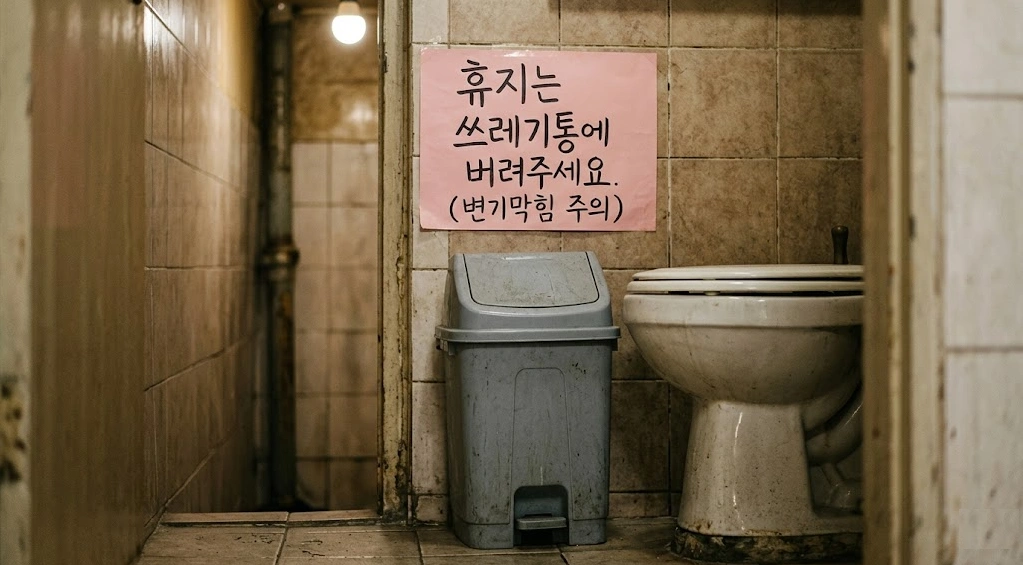
In some older buildings, people are still expected to throw used toilet paper into the bin rather than flush it. This is usually because of older plumbing or long-standing facility rules. In other places, the bin may simply be there for sanitary products, packaging, or general waste, while toilet paper can still be flushed.
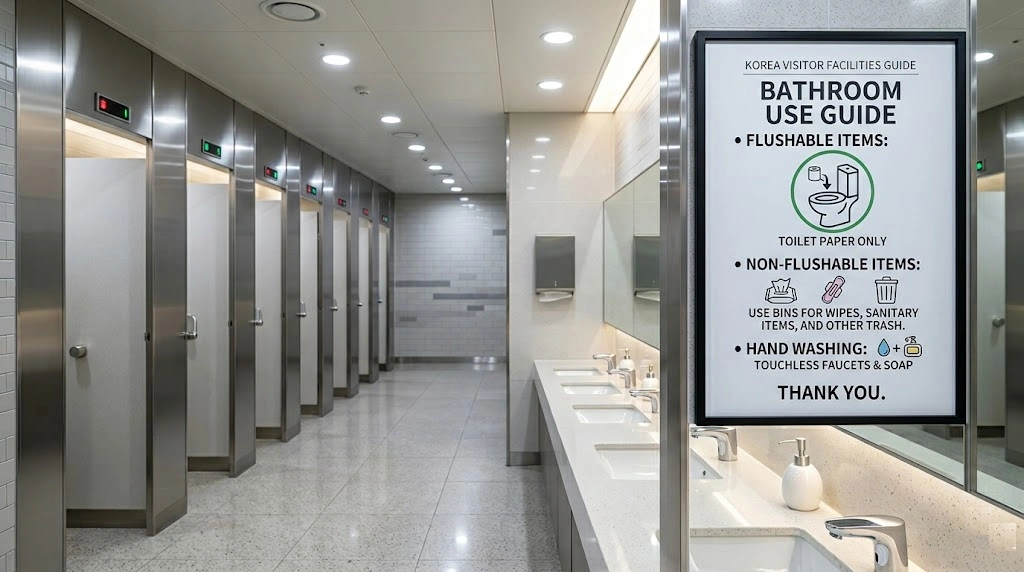
That is why the sign matters more than the bin itself. If a bathroom specifically tells users not to flush toilet paper, follow the instruction. If there is no such sign, do not assume the presence of a bin alone automatically means toilet paper must go inside it.
For tourists, the easiest approach is to avoid overthinking and just observe the restroom carefully. Korea is not a country where every bathroom follows one universal rule. Different locations can feel slightly different, and that is normal.
Paper Towels Are Different from Toilet Paper
This is where some travelers make an avoidable mistake.
Even in bathrooms where normal toilet paper can be flushed, thicker paper towels should not be put into the toilet. This includes the stiff hand-drying paper often found near sinks. That type of paper does not break down the same way toilet paper does, and it should go in the trash bin.
This may sound obvious, but when travelers are in a hurry, tired, or dealing with a bathroom that is set up differently from what they expect, they sometimes treat all paper as the same. It is not.
A useful rule is simple:
- toilet paper: usually flush if the bathroom setup allows it
- paper towels / hand-drying paper: throw in the bin
- sanitary items / wipes / tissues that are not toilet paper: bin, not toilet
If you remember only one thing from this section, remember this: do not flush thick sink-side paper towels.
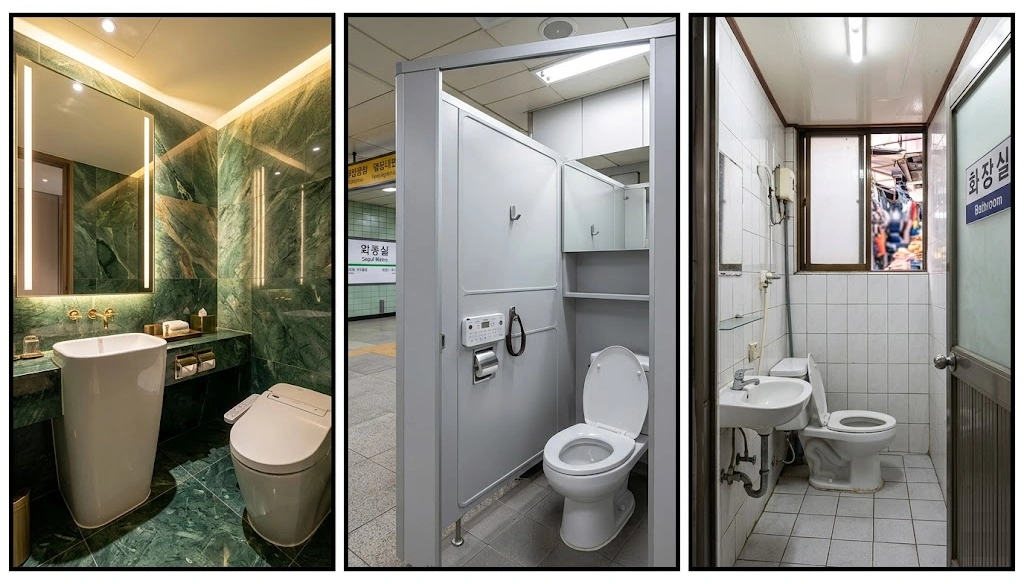
Public Bathrooms, Cafes, Hotels, and Subway Stations Can Feel Different
One reason tourists get mixed messages about bathrooms in Korea is that not all restrooms are the same. The experience depends a lot on where you are.
Hotels
Hotel bathrooms are usually the easiest for foreign travelers. In most cases, everything feels familiar. Toilet paper is normally flushed, supplies are provided, and the overall setup is simple.
Cafes and restaurants
Bathrooms in cafes and restaurants can vary. Chain brands and newer places tend to be straightforward, while smaller or older businesses may have older restroom setups or less clear signage.
Department stores and malls
These are often some of the best public bathrooms for tourists. They are usually clean, well maintained, and easy to understand.
Subway stations and public facilities
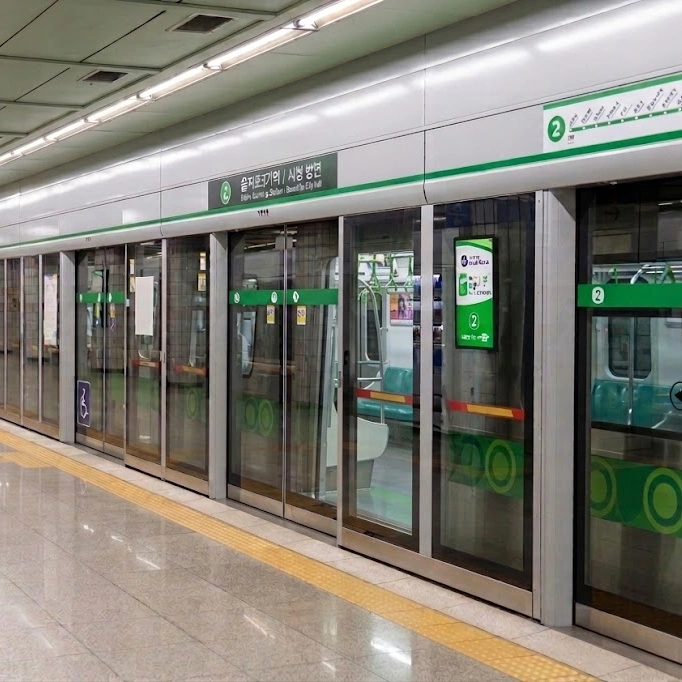
Many station bathrooms are convenient and clean, but they can vary depending on the station and area. Some are very modern, while others feel more utilitarian. Travelers should not expect every subway restroom to feel the same.
Markets and older neighborhoods
This is where you are more likely to encounter a restroom that has older rules, clearer trash-bin use, or fewer supplies than expected.
In short, tourists do better when they expect variation, not total consistency.
Do Not Assume Every Bathroom Is Fully Stocked
Another useful tip: do not assume every public restroom will have everything you need.
Many do, especially in airports, hotels, department stores, and newer commercial buildings. But in some places, one or more of these may be missing:
- soap
- paper towels
- strong hand dryers
- toilet paper inside every stall
This does not mean Korean bathrooms are generally bad. It just means travelers should be slightly more prepared than they might be at home.
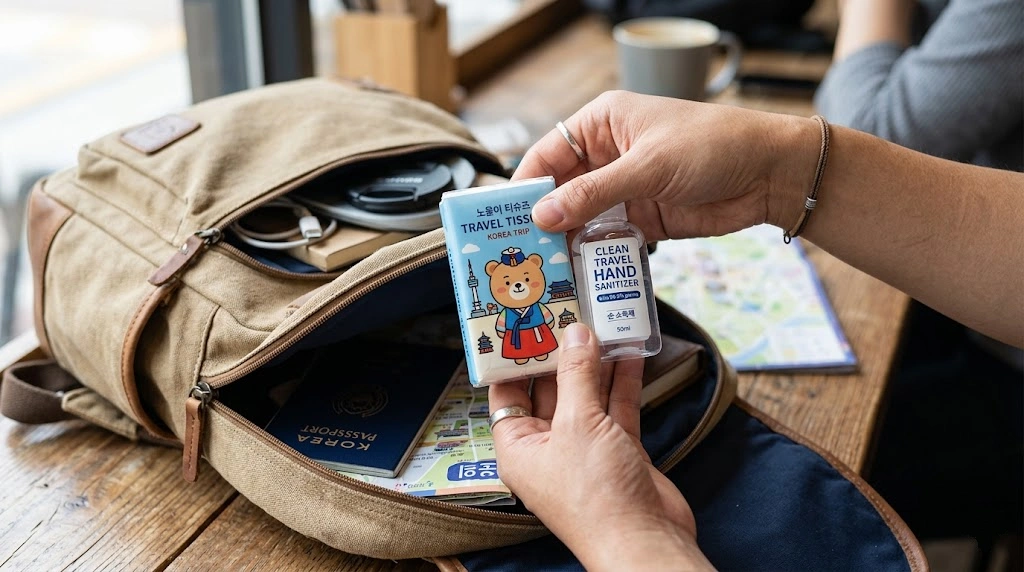
A small packet of tissues, a travel-sized hand sanitizer, or just the habit of checking the stall before locking the door can save you some inconvenience. These are small details, but they make daily travel smoother.
Look for Signs Before You Decide What to Do
The best bathroom habit for tourists in Korea is simple: look around before acting automatically.
Check for:
- a sign about toilet paper
- whether there is a dedicated paper bin
- whether the paper near the sink is a towel or tissue
- whether supplies are inside the stall or outside
A lot of confusion disappears once you stop assuming and start reading the room for a few seconds.
Even if you cannot read Korean well, signs are often easy to interpret because of symbols, arrows, or the physical setup. And if you are unsure, following what seems most clearly intended by the facility is usually the safest choice.
Should Tourists Carry Tissues?
Yes, carrying tissues is a very good idea.
This is one of those small Korea travel habits that sounds minor until it becomes useful several times in one day. A compact tissue pack can help when:
- toilet paper is low
- the restroom is less stocked than expected
- you need something quick while outside
- you want a backup during long sightseeing days
This is not because restrooms in Korea are generally poor. It is simply because travelers benefit from having a lightweight backup. Many experienced visitors do this without even thinking about it after the first day.
What About Cleanliness?
In general, many public bathrooms in Korea are perfectly decent, and a lot of them are cleaner than first-time visitors expect. Airports, hotels, shopping centers, and newer facilities are often very comfortable.
Still, travelers should understand that quality can vary depending on the location, age of the building, and how heavily the bathroom is being used. A restroom in a department store in central Seoul and a restroom in an older local market may feel very different.
The important thing is not expecting perfection everywhere. The standard is often good, but flexibility helps.
Common Mistakes Tourists Make in Korean Bathrooms
The most common mistakes are not dramatic, but they are easy to avoid.
Assuming every bin means toilet paper must go in it
Sometimes yes, sometimes no. Check for instructions.
Flushing paper towels
This is one of the easiest mistakes to avoid. Hand-drying paper belongs in the bin.
Assuming every bathroom is stocked the same way
Some are, some are not. Check first.
Ignoring signs
If a facility asks users to follow a certain rule, just follow it. It saves trouble for everyone.
Treating one bathroom experience as the rule for the whole country
Korea has many modern bathrooms, but not every building works exactly the same way.
So What Should Tourists Actually Do?
If you want the simplest possible rule, do this:
Flush normal toilet paper in places where that seems standard, but if a bathroom clearly asks you to use the bin, follow the instruction. Never flush paper towels.
That is the practical answer most travelers need.
You do not need to be nervous about using bathrooms in Korea. You just need to stay observant and flexible. Once you understand that restrooms can vary by location, the whole topic becomes much less confusing than it first seems.
Final Thoughts
Bathroom rules in Korea are not as complicated as some travel myths make them sound. The main thing to remember is that there is no single rule that applies to every restroom in every building.
In many places, flushing toilet paper is completely normal. In some places, especially older facilities, there may be different instructions. Bins do not always mean the same thing, and paper towels should always be treated differently from toilet paper.
For tourists, the best approach is practical rather than dramatic: check the setup, follow the signs, carry tissues if you can, and do not overthink it. Once you do that, using public bathrooms in Korea becomes just another normal part of travel.