


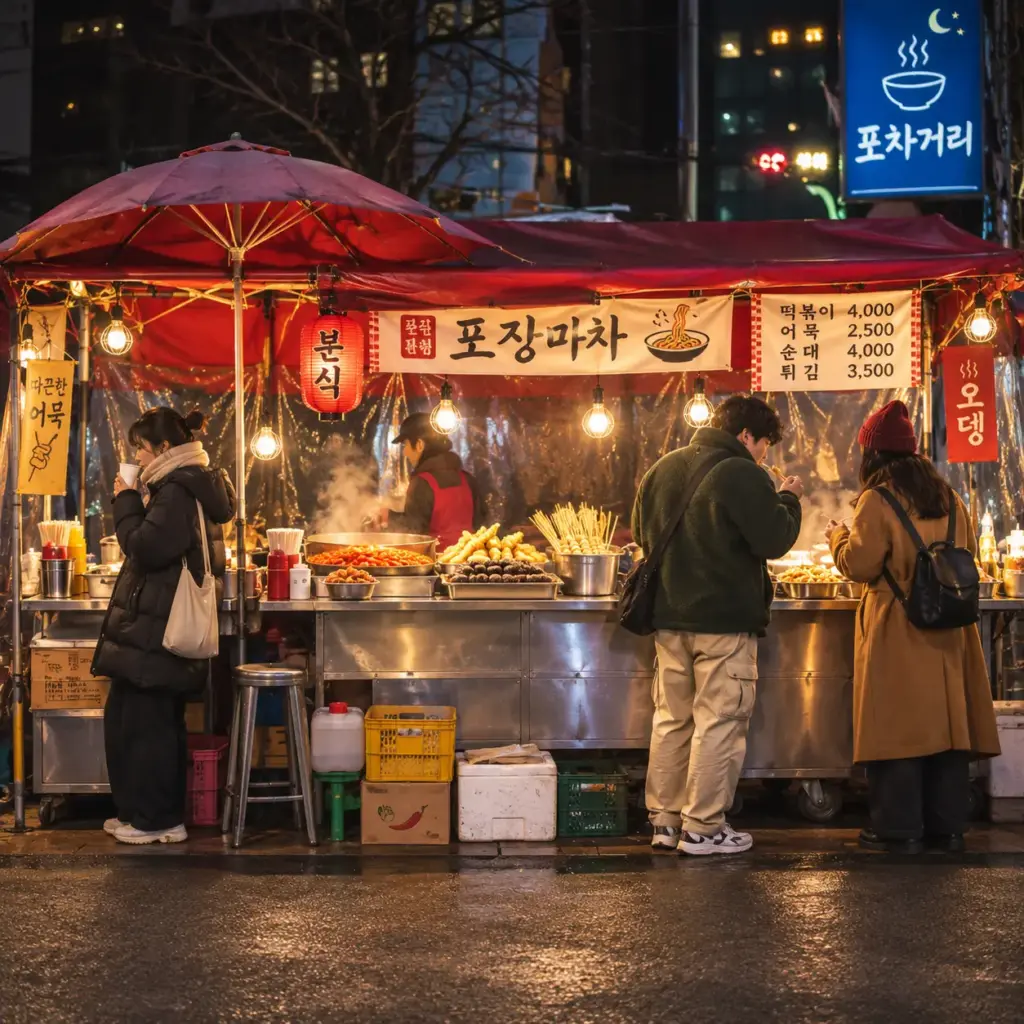
If you travel to Korea in winter, it is a good idea to pay attention not only to famous tourist attractions and dazzling night views but also to the small food stalls you find on the streets.
As the weather gets colder, the streetscapes of Korea change little by little. Fish-shaped bread is grilled on a griddle, and sweet hotteok sizzles. Warm steam rises from a pot filled with fish cakes, and the aroma of freshly baked sweet potatoes adds to the winter atmosphere.
Most Korean winter street foods are characterized by being easy to purchase and perfect for stopping by briefly to enjoy while on the go. While the flavors and ingredients vary by dish, they all share the commonality of being eaten warm in the cold weather.
Especially for foreign travelers visiting Korea for the first time, street food is a great opportunity to experience the local everyday food culture. This is because they can taste snacks enjoyed by Koreans without the hassle of restaurant reservations and discover food customs that vary slightly from region to region.
In this article, I will introduce six street foods that represent winter in Korea. From sweet snacks like Bungeoppang and Hotteok to fish cakes, roasted sweet potatoes, egg bread, and roasted chestnuts, I have summarized the characteristics of each along with useful information to know while traveling.
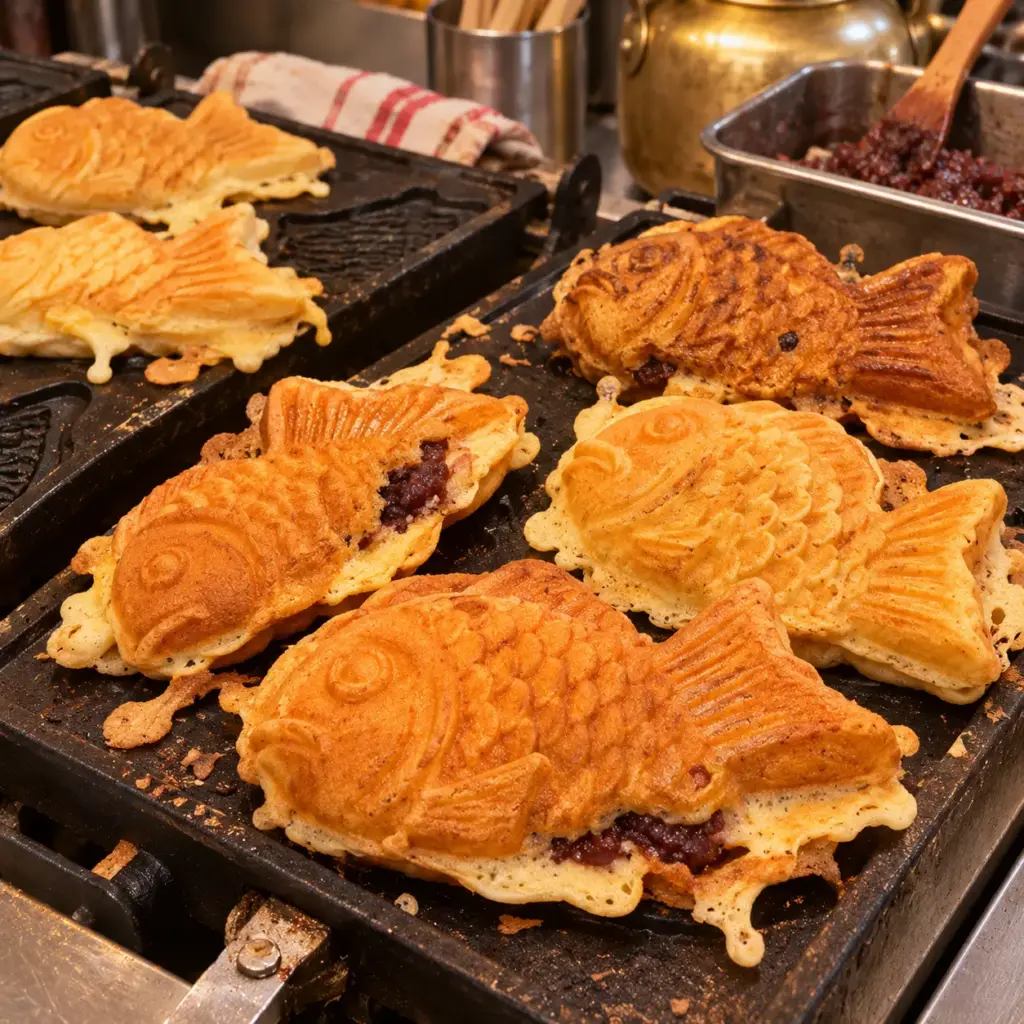
Bungeoppang, a representative winter snack in Korea
Bungeoppang is a representative street food that cannot be left out when thinking of winter in Korea.
As the name suggests, it is characterized by its shape resembling a crucian carp. However, it is not actually a dish containing fish. It is a snack made by placing flour dough into a fish-shaped metal mold, filling it with sweet ingredients, and baking it.
The most traditional type of bungeoppang is the one filled with red bean paste. The golden-brown exterior is savory, while the inside contains soft and sweet red bean paste. Freshly baked bungeoppang has crispy edges and a moist interior, allowing you to enjoy contrasting textures.
Recently, there are many places selling fish-shaped bread filled with custard cream in addition to red bean paste. Custard cream fish-shaped bread is characterized by the sweetness of the soft cream, making it relatively easy for foreign travelers who are not accustomed to the taste of red bean paste to try.
There is also an interesting cultural aspect associated with Bungeoppang. In Korea, people often lightly discuss whether to eat it head-on or tail-on. While there isn't a significant difference in taste regardless of which side you eat first, this illustrates the small, everyday cultural aspects surrounding this winter snack in Korea.
Bungeoppang is mainly sold in many places during the colder season. However, it is not easily found in every region, and the location and operating hours of the stalls may vary depending on the season or the seller.
If you come across a shop baking Bungeoppang while walking down a Korean winter street, stopping for a moment to taste it can be a good experience.
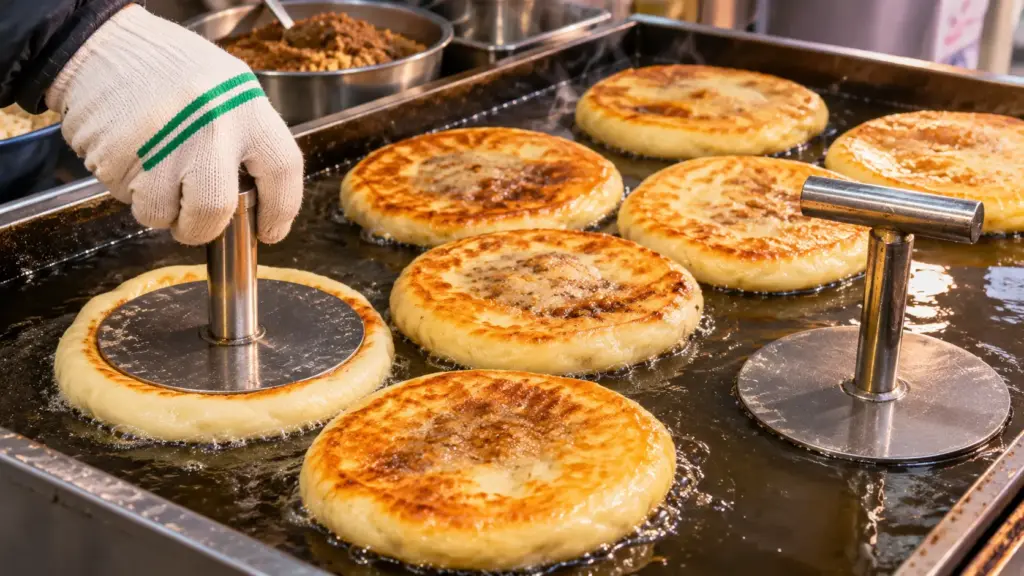
Hotteok, a Korean-style pancake with appealing sweet syrup
Hotteok is a winter snack that has long been loved in Korea, along with Bungeoppang.
It is a food made by filling flour dough with sugar, cinnamon, nuts, etc., then pressing it flat on a hot griddle and baking it.
Although it may look similar to a pancake due to its round shape, it differs from a regular pancake in its cooking method and texture. Hotteok is characterized by the sugar inside the dough melting when heated, creating a sweet syrup.
The outside is baked to a golden brown for a nutty flavor, while the inside offers a warm and rich sweetness. The chewy texture of the dough blends harmoniously with the sweet filling, making it especially suitable for cold weather.
Watching the making of hotteok is one of the pleasures. The seller places the round dough onto a greased griddle and presses it down with a special tool to spread it out. A sweet aroma spreads around as the dough is flipped over while baking.
Hotteok has evolved into slightly different forms depending on the region. A representative example is Busan's seed hotteok.
Seed Hotteok is a food that emphasizes a nutty texture by adding various seeds, such as sunflower seeds or pumpkin seeds. Compared to regular sugar Hotteok, the composition of the filling is different, and the chewing sensation is even richer.
You can find shops selling these seed hotteok in traditional markets or around tourist attractions in Busan.
There is one thing to keep in mind when eating hotteok. Freshly baked hotteok may contain very hot sugar syrup inside. Even if the outside has cooled down sufficiently, the inside can still be hot, so it is best to eat it slowly in small portions.
If you like sweet snacks, Hotteok is a food worth trying at least once during a winter trip to Korea.
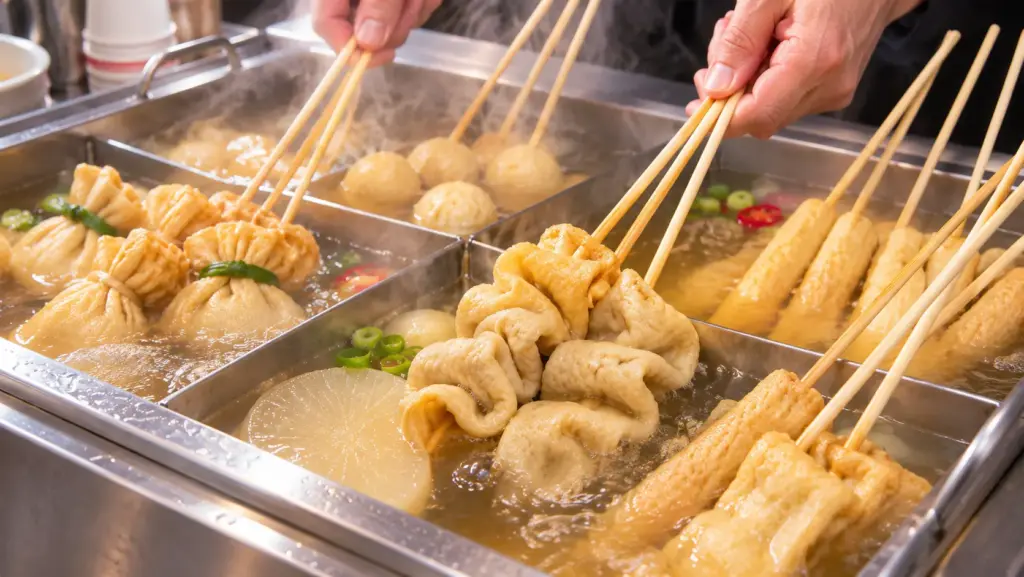
Fish cake, a warm soup dish perfect for cold weather
If Bungeoppang and Hotteok are sweet snacks, Eomuk is a street food loved for its salty and savory taste.
Fish cakes are a food made by cooking a batter primarily composed of ground fish meat. In Korean street food stalls, it is common to see flat fish cakes folded, skewered on wooden sticks, and sold submerged in warm broth.
The biggest characteristic of fish cake is its soft yet chewy texture. Soaked in broth, it is moist, and you can taste the savory umami unique to fish meat.
When enjoying street fish cakes in Korea, the fish cake broth is an essential accompaniment.
Depending on the shop, the broth is made using ingredients such as anchovies or kelp. The warm broth goes well with fish cakes and is also perfect for warming up briefly in cold weather.
Fish cakes, in particular, are often sold together with tteokbokki. Spicy tteokbokki and mild fish cakes have different flavors, making them a great combination to enjoy together.
Busan fish cakes are well-known as a local delicacy. In Busan, you can find specialty shops selling fish cakes made with various shapes and ingredients. It is an interesting experience to compare the different types of fish cakes, not just the typical street ones.
However, since fish cakes are primarily made of fish, travelers with seafood allergies should exercise caution. Depending on the product, wheat or other ingredients may also be included.
Vegetarians also need to check the ingredients. This is because fish cakes themselves contain fish, and the broth often uses fish or seafood as well.
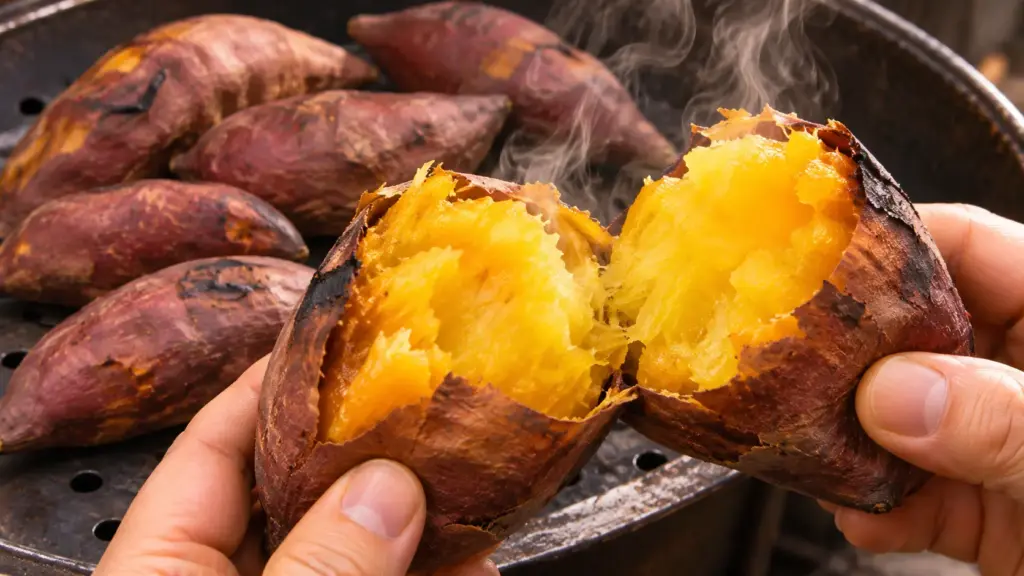
Roasted sweet potatoes, a winter food to enjoy a natural sweetness
Roasted sweet potatoes are a winter snack that has long been enjoyed in Korea.
It is a dish made by roasting sweet potatoes with the skin on over high heat until they are soft all the way through, characterized by the fact that you can enjoy the natural sweetness of the sweet potato without adding sugar or syrup.
The texture varies depending on the sweet potato variety and the roasting method. Some roasted sweet potatoes are fluffy and soft, while others are moist inside and have a rich sweetness.
When you peel the skin off a well-roasted sweet potato, the yellow flesh is revealed. The distinctive aroma of sweet potatoes, carried along with the warm steam, is one of the familiar scenes that reminds one of winter in Korea.
In the past, street vendors roasting sweet potatoes in large drums were a common sight in Korea during the winter. Now, however, roasted sweet potatoes are sold at specialty shops and some convenience stores, making them available in a wider variety of places.
Roasted sweet potatoes can be a good choice even for those who find fried foods or rich sugar syrups overwhelming. This is because it is a snack where you can enjoy the natural flavor of the ingredients.
In Korea, roasted sweet potatoes are often eaten with kimchi or dongchimi. The sweet potatoes blend with salty or refreshing side dishes, allowing you to experience distinct flavors.
It may be a slightly unfamiliar combination to foreign travelers, but it is also an interesting example that helps understand Korean home-style food culture.
Roasted sweet potatoes can be quite large depending on their size, so if you plan to try various foods, it is a good idea to share them.
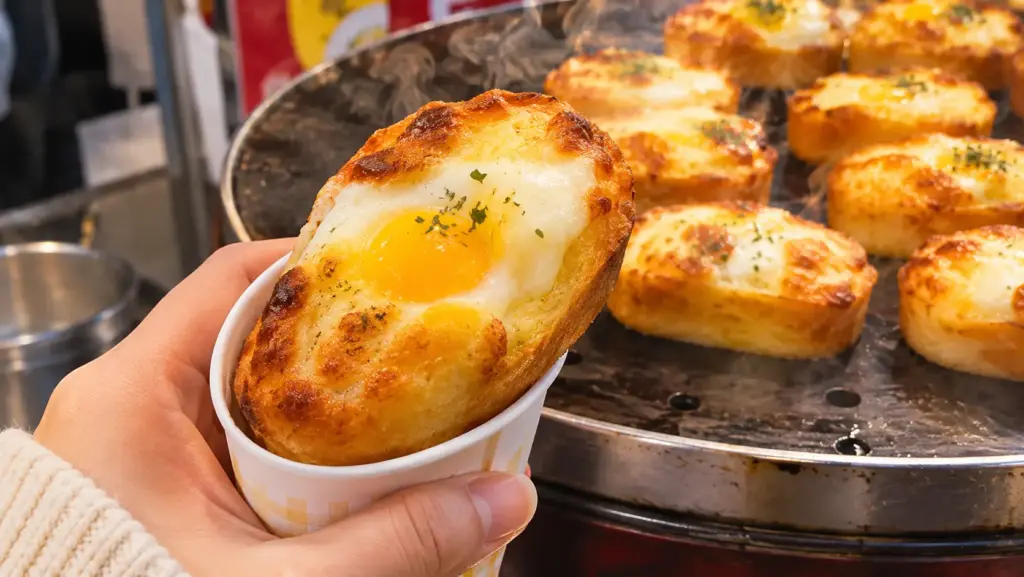
Egg bread, a simple yet hearty street snack
Egg bread is a Korean street food made by baking flour dough and eggs together.
It is a small bread filled with egg, allowing you to enjoy the subtle sweetness of the soft bread and the mild taste of the egg at the same time.
It is generally made using dedicated elongated or round molds, and a well-known method involves placing an egg on top of the dough before baking. Depending on the shop, cheese or other ingredients may also be added.
Egg bread is often less sweet than fish-shaped bread or hotteok. Therefore, it is well-suited for travelers who do not prefer overly sweet snacks.
Although it is small, it contains eggs, so it can feel more filling than expected. It is a great food to eat quickly, especially while walking around tourist attractions or browsing traditional markets during the winter.
However, since egg bread uses eggs and wheat flour, you should exercise caution if you have any food allergies related to these ingredients.
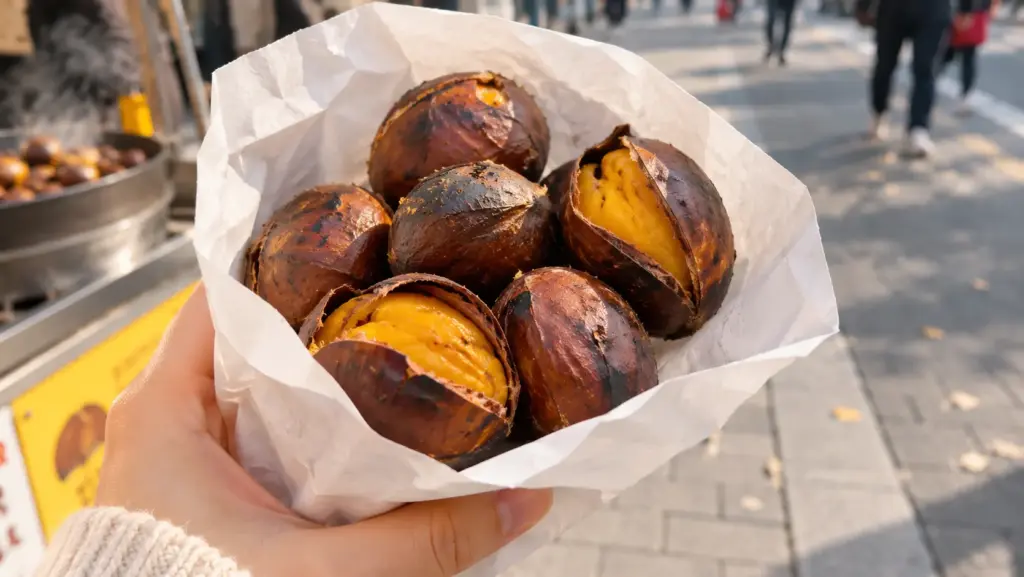
Roasted chestnuts, a snack capturing the savory flavor of winter
Roasted chestnuts are a food made by roasting chestnuts over high heat.
Roasting chestnuts makes the inside soft and brings out their natural sweetness and nutty aroma. Unlike other street foods that use sugar or various seasonings, a key feature is that you can enjoy the natural flavor of the ingredients.
Eating roasted chestnuts is also relatively simple. You just need to peel the shell and eat the yellow flesh inside.
Depending on the method of sale, the shells may be scored in advance to make them easier to peel. However, freshly roasted chestnuts can be hot, so it is best to eat them with caution.
In Korea, roasted chestnuts and roasted sweet potatoes often come to mind together during winter. Both foods are characterized by a natural sweetness and are seasonal snacks that allow you to feel warmth while eating them slowly.
If you want to avoid strong seasonings or greasy foods, roasted chestnuts are also a good choice.
Where can you find Korean winter street food?
Korean street food can be found in various places, such as traditional markets, tourist attractions, and commercial areas near subway stations.
Myeongdong in Seoul is one of the representative areas frequently visited by foreign tourists. As a place where you can find a wide variety of street food in one location, it is a relatively accessible spot for travelers trying Korean food for the first time.
However, not all street food in Myeongdong is traditional winter snack. Since a variety of foods are sold targeting tourists, if you are looking for specific items such as bungeoppang or roasted sweet potatoes, you need to check if they are actually available.
Visiting local traditional markets is also a good idea.
In traditional markets, you can find not only snacks like hotteok and fish cakes, but also everyday foods that Koreans enjoy, such as tteokbokki, fried food, and gimbap. Since the food sold and the atmosphere vary from market to market, you can also experience the joy of traveling to a specific region.
If you travel to Busan, it is a good idea to look for representative local foods such as seed hotteok or Busan fish cakes.
Meanwhile, seasonal foods like bungeoppang and roasted chestnuts are not always sold at every location. If you plan to visit a specific store, it is advisable to check the latest business hours and the actual menu items on sale.
Useful Ordering Methods for Foreign Travelers
Korean street food can be ordered relatively simply.
In most cases, you just need to state the name of the food and the desired quantity. Even if you are not fluent in Korean, knowing a few basic phrases will be helpful when ordering.
For example, if you want to order two Bungeoppang, you can say the following:
Please give me two fish-shaped breads.
To order one hotteok, you can say, "Please give me one hotteok." If you want to take the food to go, you can use the expression, "Please pack it for me."
It is also a good idea to check the payment method.
While card payments are widely used in Korea, small stalls or seasonal shops may prefer cash or bank transfers. If you are a foreign traveler, it can be convenient to have a small amount of cash on hand.
You must also be careful about the temperature of the food. In particular, the sugar syrup or fish cake broth inside the hotteok can be very hot.
On crowded streets, it is better to stop in a safe place to eat rather than walking and eating with food in your hand.
Additionally, if you have food allergies, you should check the ingredients before purchasing. Bungeoppang may contain wheat or eggs, while Hotteok sometimes includes nuts. Since Eomuk uses fish as its main ingredient, it is also necessary to check if you have dietary restrictions.
Since the recipes and ingredients used for Korean street food can vary from shop to shop, it is safe not to determine allergens based solely on the food name.
How to Add Street Food to Your Korean Winter Travel Itinerary
You do not necessarily need to make a separate travel itinerary to enjoy winter street food.
When visiting areas like Myeongdong or Jongno in Seoul where you can enjoy both sightseeing and shopping, it is a good idea to check out nearby traditional markets or food stalls.
After touring the tourist attractions in the afternoon, it is a good idea to take a short break and enjoy some warm fish cakes or hotteok. In the evening, you can look for simple snacks like bungeoppang or roasted sweet potatoes while admiring the winter night view.
If you want to taste several foods at once, it is best to share them with your companions. Since each food has a different taste and texture, comparing small portions will help you determine which snacks suit your preference.
If you prefer sweet foods, Bungeoppang and Hotteok are good choices. If you like salty and warm food, I recommend Eomuk. If you want to enjoy a natural sweetness, you can choose roasted sweet potatoes and roasted chestnuts.
Egg bread is a good choice when you are looking for a simple yet slightly more filling snack.
When choosing food while traveling, simply check the price, ingredients, and portion size, and select according to your taste.
Small foods that make Korean winter even more special
The charm of Korean winter street food lies not only in its colorful or special ingredients.
The moment you receive warm food on a cold street, the warmth emanating from the paper bag, and the time spent waiting for the food to be prepared in front of a small shop create a winter scene.
The sweet red bean paste of Bungeoppang, the warm sugar syrup of Hotteok, the light broth of Eomuk, and the natural sweetness of roasted sweet potatoes showcase Korean winter in different ways.
While these foods are a familiar part of daily life for Koreans, they can be a new cultural experience for foreigners traveling to Korea for the first time.
If you are planning to visit Korea in the winter, it is a good idea to include time to taste street food between touring famous tourist attractions.
Through a small snack, you will be able to get a closer feel for how Koreans spend the winter and the atmosphere of the streets that changes with the seasons.


